

Зачем нужны дискретные датчики в промышленности секрет надежности
В современной промышленности автоматизация играет ключевую роль в повышении производительности, снижении затрат и обеспечении безопасности. Одним из фундаментальных элементов автоматизированных систем являются дискретные датчики. Эти устройства, способные фиксировать простые бинарные состояния, такие как "включено/выключено" или "присутствует/отсутствует", могут показаться элементарными на фоне сложных аналоговых или интеллектуальных систем. Однако именно их простота и надежность делают их незаменимыми в различных отраслях промышленности. В этой статье мы подробно рассмотрим, зачем нужны дискретные датчики, их преимущества, применения и почему они являются секретом надежности в промышленности. Мы также затронем исторический контекст, технические аспекты, сравнение с другими типами датчиков, примеры из реальной жизни и будущие тенденции, чтобы предоставить всестороннее понимание этой важной темы.
1. Введение в дискретные датчики: Основы и определения
Дискретные датчики, также известные как цифровые или бинарные датчики, представляют собой устройства, которые выдают сигнал в форме дискретных значений, обычно 0 или 1, соответствующих отсутствию или наличию определенного условия. В отличие от аналоговых датчиков, которые предоставляют непрерывный диапазон значений (например, температура или давление), дискретные датчики работают по принципу "да/нет". Это делает их идеальными для задач, где требуется быстрое и точное определение состояния объекта или процесса.
Исторически, дискретные датчики появились вместе с развитием автоматики в середине XX века. Первые примеры включали механические выключатели и реле, которые использовались в простых системах управления. С развитием электроники, появились более совершенные типы, такие как оптические, индуктивные и емкостные датчики, которые стали широко применяться в промышленности благодаря своей надежности и долговечности.
Основные типы дискретных датчиков включают:
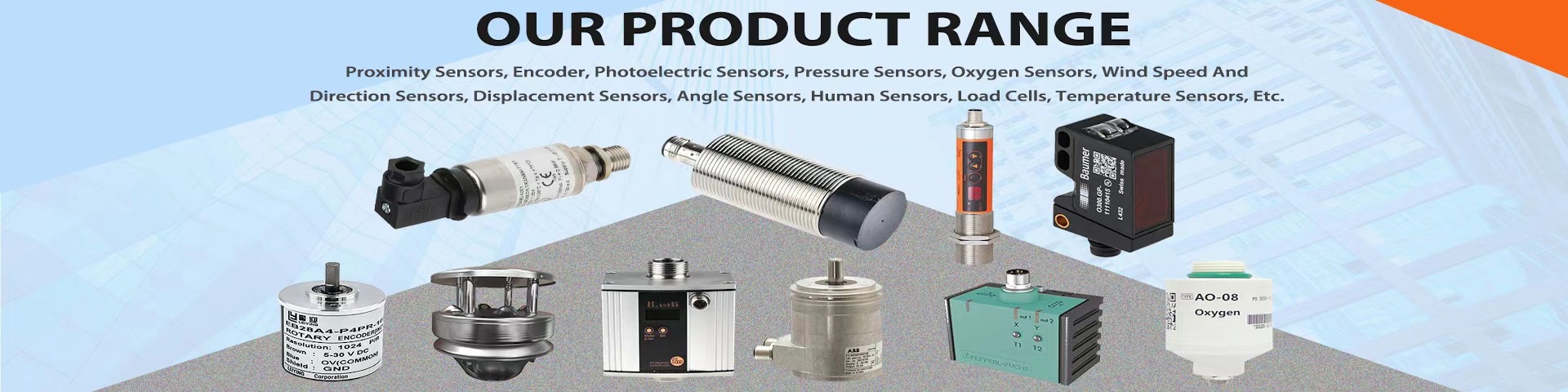
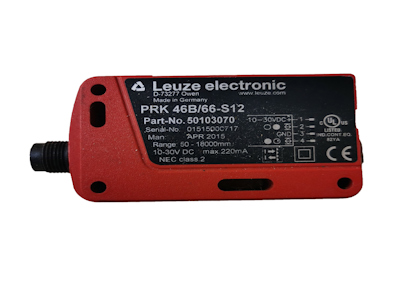
- Индуктивные датчики: Обнаруживают металлические объекты без физического контакта, используя электромагнитное поле. Они идеальны для применений в металлообработке и упаковке.
- Оптические датчики: Используют свет для обнаружения объектов. Подразделяются на фотоэлектрические (передатчик-приемник) и рефлекторные типы. Широко используются в логистике и контроле качества.
- Емкостные датчики: Реагируют на изменения емкости, вызванные присутствием объектов, включая неметаллические материалы. Применяются в пищевой и химической промышленности.
- Механические датчики: Включают кнопки, микровыключатели и другие устройства, активируемые физическим контактом. Просты и надежны, но могут изнашиваться со временем.
- Магнитные датчики: Используют магнитные поля для обнаружения, например, в системах позиционирования или безопасности.
Принцип работы дискретных датчиков основан на преобразовании физического явления в электрический сигнал. Например, индуктивный датчик генерирует высокочастотное электромагнитное поле. Когда металлический объект попадает в зону действия, поле изменяется, что приводит к изменению выходного сигнала с 0 на 1. Этот сигнал затем передается в систему управления, такую как программируемый логический контроллер (ПЛК), который принимает решения на основе этих данных.
Ключевые характеристики дискретных датчиков включают:
- Надежность: Минимальное количество движущихся частей снижает риск отказа.
- Скорость отклика: Быстрое переключение состояний, что критично для высокоскоростных процессов.
- Простота интеграции: Легко подключаются к стандартным системам управления.
- Устойчивость к окружающей среде: Многие модели защищены от пыли, влаги и вибраций, что делает их пригодными для жестких промышленных условий.
В целом, дискретные датчики служат "глазами и ушами" автоматизированных систем, предоставляя essential данные для контроля и управления. Их роль в обеспечении надежности невозможно переоценить, особенно в отраслях, где ошибки могут привести к значительным потерям или опасностям.
2. Преимущества дискретных датчиков в промышленности
Дискретные датчики предлагают ряд преимуществ, которые делают их предпочтительным выбором для многих промышленных применений. Эти преимущества не только способствуют повышению эффективности, но и напрямую влияют на надежность систем.
Во-первых, простота и минимализм. Поскольку дискретные датчики выдают только два состояния, их конструкция часто проще, чем у аналоговых собратьев. Это означает меньше компонентов, которые могут выйти из строя, и более низкую вероятность ошибок. В промышленности, где downtime (простой оборудования) может стоить тысяч долларов в минуту, эта надежность является crucial. Например, в автомобильном производстве, индуктивные датчики используются для обнаружения положения деталей на конвейере. Их простая работа ensures, что сборка проходит без сбоев, предотвращая дорогостоящие задержки.
Во-вторых, cost-effectiveness. Дискретные датчики generally дешевле в производстве и обслуживании compared to сложные аналоговые или smart датчики. Это делает их accessible для массового применения, even в small и medium-sized предприятиях. Additionally, их долгий срок службы и low maintenance requirements further reduce общие costs владения. В условиях глобальной конкуренции, это экономическое преимущество позволяет компаниям инвестировать в другие areas, such as инновации или expansion.
В-третьих, высокая скорость и точность. Дискретные датчики могут реагировать на изменения за миллисекунды, что essential для applications, требующих real-time контроля. Например, в packaging industry, optical датчики detect presence of products on a conveyor belt at high speeds, ensuring that only complete packages are forwarded for shipping. This precision minimizes waste and improves overall efficiency.
В-четвертых, универсальность и адаптивность. Благодаря разнообразию типов, дискретные датчики can be tailored to specific needs. Whether it's detecting metal parts in a machining center or non-metallic materials in a food processing plant, there is a sensor designed for the task. Moreover, they can be easily integrated with existing control systems, such as PLCs or SCADA systems, without major modifications.
В-пятых, безопасность. Дискретные датчики play a vital role in safety systems. For instance, emergency stop buttons or presence sensors on machinery ensure that equipment stops immediately if a worker enters a dangerous area. This not only protects personnel but also prevents accidents that could damage equipment or halt production.
Пример из практики: На металлургическом заводе, индуктивные датчики используются для monitoring position of rollers in a rolling mill. Their reliability ensures that the process runs smoothly, reducing the risk of jams or breakdowns that could lead to significant financial losses.
В сравнении с аналоговыми датчиками, которые provide continuous data but require more complex interpretation and are prone to noise interference, discrete sensors offer a straightforward solution for binary decisions. However, it's important to note that they are not suitable for all applications; for tasks requiring detailed measurements, analog or smart sensors might be necessary. But for many industrial scenarios, the simplicity and reliability of discrete sensors make them the best choice.
Таким образом, advantages of discrete sensors contribute directly to industrial reliability by minimizing failures, reducing costs, and enhancing safety. As industries move towards greater automation, their role will only become more prominent.
3. Применения дискретных датчиков в различных отраслях
Дискретные датчики находят применение в virtually every sector of industry, from manufacturing and logistics to energy and healthcare. Their versatility allows them to address a wide range of tasks, making them indispensable tools for modern automation.
В обрабатывающей промышленности, discrete sensors are used extensively on assembly lines. For example, in the automotive sector, inductive sensors detect the presence of car parts during welding or painting processes. This ensures that each step is completed correctly, preventing defects and improving quality control. Optical sensors are employed to verify that components are properly aligned before assembly, reducing the likelihood of errors that could lead to recalls or customer dissatisfaction.
В логистике и складском хозяйстве, sensors play a key role in automation. Barcode scanners and photoelectric sensors help track inventory movement on conveyors, enabling real-time monitoring and efficient routing. In automated storage and retrieval systems (AS/RS), sensors ensure that goods are picked and placed accurately, minimizing handling time and errors. This is particularly important in e-commerce, where speed and accuracy are critical for customer satisfaction.
В энергетике, discrete sensors are used for safety and monitoring. For instance, in power plants, sensors detect the position of valves or the status of circuit breakers, providing essential data for control systems to prevent overloads or failures. In renewable energy, such as wind turbines, sensors monitor blade position or gearbox status to optimize performance and prevent damage.
В пищевой промышленности, where hygiene and precision are paramount, capacitive sensors are commonly used to detect levels of liquids or presence of packaging materials. They are designed to withstand harsh cleaning processes, ensuring reliability in environments where contamination must be avoided. Optical sensors check for proper labeling or seal integrity on food packages, helping to maintain quality standards.
В химической и фармацевтической отраслях, sensors contribute to process control and safety. For example, discrete sensors monitor the filling levels of tanks or the operation of pumps, ensuring that processes run within specified parameters. In hazardous environments, explosion-proof sensors are used to detect leaks or abnormal conditions, triggering alarms or shutdowns to prevent accidents.
В робототехнике и автоматизированном производстве, discrete sensors are integral to navigation and object detection. Robots use sensors to avoid obstacles, pick up items, or confirm task completion. This enhances the autonomy and efficiency of robotic systems, making them more reliable in dynamic environments.
Пример из реальной жизни: На beverage bottling plant, optical sensors are installed along the conveyor to detect missing caps on bottles. If a bottle without a cap is detected, the sensor signals the system to reject it, ensuring that only properly sealed products reach consumers. This not only improves product quality but also reduces waste and potential health risks.
Кроме того, в emerging fields like the Internet of Things (IoT), discrete sensors are being integrated with wireless technology to enable remote monitoring and predictive maintenance. For instance, in smart factories, sensors can send data to cloud platforms for analysis, allowing companies to anticipate failures and schedule maintenance before issues arise, further enhancing reliability.
Overall, the applications of discrete sensors are vast and growing. As industries continue to evolve, these sensors will adapt to new challenges, solidifying their role as a cornerstone of industrial reliability.
4. Сравнение с аналоговыми и интеллектуальными датчиками
Чтобы fully appreciate the value of discrete sensors, it is important to compare them with other types of sensors, namely analog and smart sensors. Each has its own strengths and weaknesses, and the choice depends on the specific requirements of the application.
Аналоговые датчики provide continuous output signals that vary proportionally with the measured parameter. For example, a temperature sensor might output a voltage that changes with temperature. This allows for detailed monitoring and control, but it also introduces complexity. Analog signals are susceptible to noise and interference, which can lead to inaccuracies if not properly shielded or processed. Additionally, analog sensors often require analog-to-digital converters (ADCs) to interface with digital control systems, adding cost and potential points of failure.
In contrast, discrete sensors output digital signals that are inherently noise-resistant and easy to process. They do not require ADCs, simplifying integration and reducing overall system complexity. However, their limitation is that they only provide binary information, which is insufficient for applications needing precise measurements. For instance, in a process where exact temperature control is critical, an analog sensor would be necessary, while a discrete sensor might only indicate if the temperature is above or below a threshold.
Интеллектуальные датчики (smart sensors) combine sensing with onboard processing and communication capabilities. They can perform tasks like data analysis, self-calibration, and networking, often through protocols like IO-Link or Ethernet. Smart sensors offer advanced features such as diagnostics, parameterization, and integration with IoT systems. This makes them highly versatile and valuable for complex applications where data richness is important.
However, smart sensors are generally more expensive and complex than discrete sensors. They may also require more sophisticated infrastructure, such as networked controllers and software, which can increase implementation costs and maintenance efforts. In many cases, the additional functionality of smart sensors is overkill for simple binary tasks, making discrete sensors a more economical and reliable choice.
For example, in a simple counting application on a conveyor belt, a discrete optical sensor is sufficient to detect objects and increment a counter. Using a smart sensor here would be unnecessary and costly. Conversely, in a scenario where predictive maintenance is needed, a smart sensor that monitors vibration trends might be preferable.
The reliability aspect favors discrete sensors in harsh environments. Their rugged design and simplicity make them less prone to failures compared to more complex analog or smart sensors. In industries like mining or heavy machinery, where conditions are dirty, wet, or vibrating, discrete sensors often outperform their counterparts in terms of longevity and uptime.
Таким образом, while analog and smart sensors have their places, discrete sensors excel in applications requiring simple, reliable, and cost-effective binary detection. The key is to match the sensor type to the task: use discrete for on/off decisions, analog for continuous measurement, and smart for advanced functionality. This strategic selection contributes to overall system reliability by ensuring that the right tool is used for the job.
As technology advances, the lines between these types may blur, with hybrid sensors emerging. But for now, discrete sensors remain a fundamental and reliable choice in industrial automation.
5. Будущие тенденции и инновации в области дискретных датчиков
Мир промышленной автоматизации постоянно evolving, и дискретные датчики не exception. Several trends and innovations are shaping their future, enhancing their capabilities and expanding their applications.
Одной из key trends является integration с IoT и Industry 4.0. Discrete sensors are being equipped with wireless connectivity, allowing them to communicate data directly to cloud platforms or central systems. This enables real-time monitoring, remote diagnostics, and predictive maintenance. For instance, a discrete sensor on a machine can send an alert when it detects an abnormal condition, such as a jam or wear, allowing maintenance teams to address issues before they cause downtime. This proactive approach significantly improves reliability and reduces operational costs.
Другой innovation заключается в miniaturization и enhanced durability. Advances in materials science and electronics are making sensors smaller, more robust, and capable of operating in extreme conditions. For example, sensors with IP69K ratings are designed to withstand high-pressure washdowns, making them ideal for food processing or pharmaceutical industries. Additionally, the development of MEMS (Micro-Electro-Mechanical Systems) technology is enabling the creation of tiny discrete sensors that can be embedded in various devices without occupying much space.
Energy efficiency is also a growing focus. With the rise of battery-powered and energy-harvesting systems, discrete sensors are being designed to consume less power. This is particularly important for applications in remote or mobile settings, such as agriculture or logistics, where sensors need to operate for long periods without external power sources. Energy-efficient sensors contribute to sustainability and reduce the total cost of ownership.
Умные функции are being incorporated into discrete sensors without compromising their simplicity. For example, some modern discrete sensors include basic diagnostics, such as LED indicators for status or fault detection. Others support simple communication protocols that allow for easy parameterization and integration with higher-level systems. This blends the reliability of discrete sensors with some of the benefits of smart sensors, offering a best-of-both-worlds solution.
В области artificial intelligence и machine learning, discrete sensors are playing a role in data collection for AI algorithms. By providing reliable binary data, they feed into systems that learn patterns and optimize processes. For instance, in predictive maintenance, data from discrete sensors can be used to train models that predict equipment failures, further enhancing reliability.
Пример инновации: Компании like Sick or Omron are developing discrete sensors with IO-Link capability, which allows for digital communication and parameter setting while maintaining the simplicity of binary output. This enables users to easily configure sensors for different tasks without physical adjustments, reducing setup time and improving flexibility.
Кроме того, standardisation и interoperability are improving. Industry standards, such as those from IEC or ISO, ensure that discrete sensors from different manufacturers can work together seamlessly. This reduces compatibility issues and makes it easier for companies to upgrade or expand their systems without being locked into a single vendor.
Looking ahead, the future of discrete sensors will likely involve greater integration with other technologies, such as robotics, augmented reality, and 5G networks. For example, in smart factories, sensors could work alongside AR glasses to provide real-time data to operators, enhancing decision-making and reliability.
В заключение, while discrete sensors are already highly reliable, ongoing innovations will make them even more versatile and indispensable in the industrial landscape. By embracing these trends, industries can further leverage the secret of reliability that discrete sensors offer.
6. Заключение: Секрет надежности в промышленности
В этой статье мы explored the critical role of discrete sensors in industry and why they are considered a secret to reliability. From their simple yet effective design to their wide-ranging applications, discrete sensors provide a foundation for automated systems that is both cost-effective and dependable.
Их преимущества—простота, надежность, скорость, и универсальность—make them ideal for countless industrial tasks. Whether it's ensuring safety on a production line, optimizing logistics, or enabling advanced technologies like IoT, discrete sensors deliver consistent performance that minimizes failures and maximizes efficiency.
По сравнению с аналоговыми и интеллектуальными датчиками, discrete sensors shine in scenarios where binary decisions are sufficient. Their noise immunity, ease of integration, and ruggedness make them a preferred choice in harsh environments, contributing directly to reduced downtime and lower maintenance costs.
Будущие инновации, such as IoT integration and enhanced durability, will only strengthen their position. As industries continue to advance towards digitalization and smart manufacturing, discrete sensors will adapt and evolve, remaining a key component of reliable automation.
В конечном счете, the secret to industrial reliability lies in using the right tools for the job. Discrete sensors, with their unwavering performance and adaptability, are indeed one of those essential tools. By understanding and leveraging their capabilities, companies can build more resilient and efficient operations, paving the way for a safer and more productive future.
Таким образом, ответ на вопрос "Зачем нужны дискретные датчики в промышленности" ясен: они являются неотъемлемой частью современной automation, обеспечивая надежность, которая drives industrial success.
Предыдущая статья: Перспективы подавления технологий на рынке
Следующий пост: Температурная компенсация датчика это технология будущего